
Lead gen systems · Guide 07 of 07
Missed call rescue for trades
Three systems for plumbers, electricians and roofers: catch the person searching right now, rescue the call they could not answer, and turn the photos on their phone into proof. Everything here works anywhere in the world and every prompt is written out in full.
10 min read8 steps4 promptsfree
What this is, and how it works
A trade is the only business in this series where a missed message is not a lost opportunity, it is a lost job that somebody else did that afternoon.
Everywhere else in these seven guides you are fixing how a business looks. Here you are fixing how fast it answers, and that is worth far more, because the customer with a leak is not comparing three quotes. They are ringing down a list until somebody picks up.
That single fact shapes all three systems. Speed beats polish. A plumber who replies in ninety seconds with a bad photograph beats one who replies tomorrow with a good one.
The three systems, in the order they make money
7.2 missed call rescue first, always. It is the cheapest to build, the easiest to explain, and it pays for itself on the first recovered job. A tradesman can count the jobs he lost last month and the number is never zero.
7.1 the intent catcher second. Finding people who are actively searching right now, and getting the trade in front of them before their competitors.
7.3 the job photo machine third. It is the least urgent and the most pleasant, and it is what keeps them paying once the first two are running.
The eight steps, same as every guide
- 1Find trades in one area.
- 2Qualify on responsiveness and proof.
- 3Capture their own job photographs.
- 4Work out what is honest to show.
- 5Build the rescue, the catcher, or the photo.
- 6Put it in front of them simply.
- 7Look at it yourself and approve it.
- 8Send it, or better, ring them.
This is the one trade that answers the phone. Everywhere else in this series a call is intrusive. Here it is the native channel, and a tradesman will happily talk to you at seven in the evening while sitting in the van.
The rule for this industry
Never let an automation claim a qualification, quote a price, or promise a time. A trade is regulated in most countries, a wrong quote is a real dispute, and a promised arrival time that is missed costs them a customer permanently. Everything you build here captures and hands over. It does not commit them to anything. Put that in the first sentence when you pitch, because it is the thing they are afraid of.
The example, and it is real
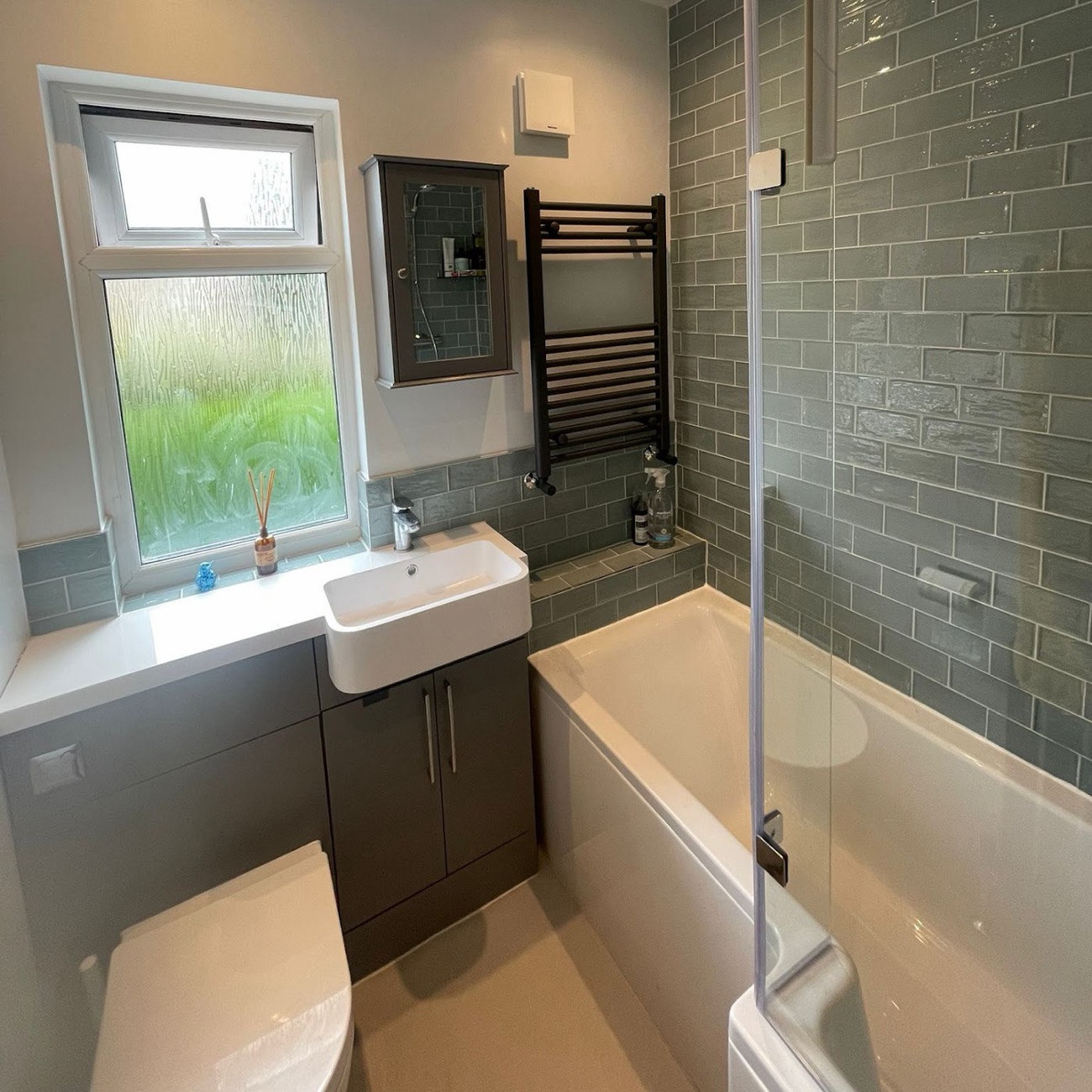
Norton Plumbing, 962 Scott Hall Road, Moortown, Leeds. 5.0 stars from 252 reviews, ten photographs on the listing, and the bathroom rebuilt later in this guide is one of their own. A genuinely excellent trade whose photographs are taken on a phone in a small room with the flash on, which is every trade everywhere.
What you need, and the missed call rescue
| Account | What it is for | Free tier | Card |
|---|---|---|---|
| Google Cloud | Finding trades, and reading how fast they respond. Places API (New). | 10,000 calls a month per tier | Yes |
| Twilio | The number that catches the missed call and sends the text | Trial credit, then per number and per message | Yes |
| An image model | Rebuilding job photographs | Per image | Yes |
| Supabase + Vercel | Holding the leads and the landing pages | See guide 1 | Later |
7.2Missed call rescue, and it is thirty lines of code
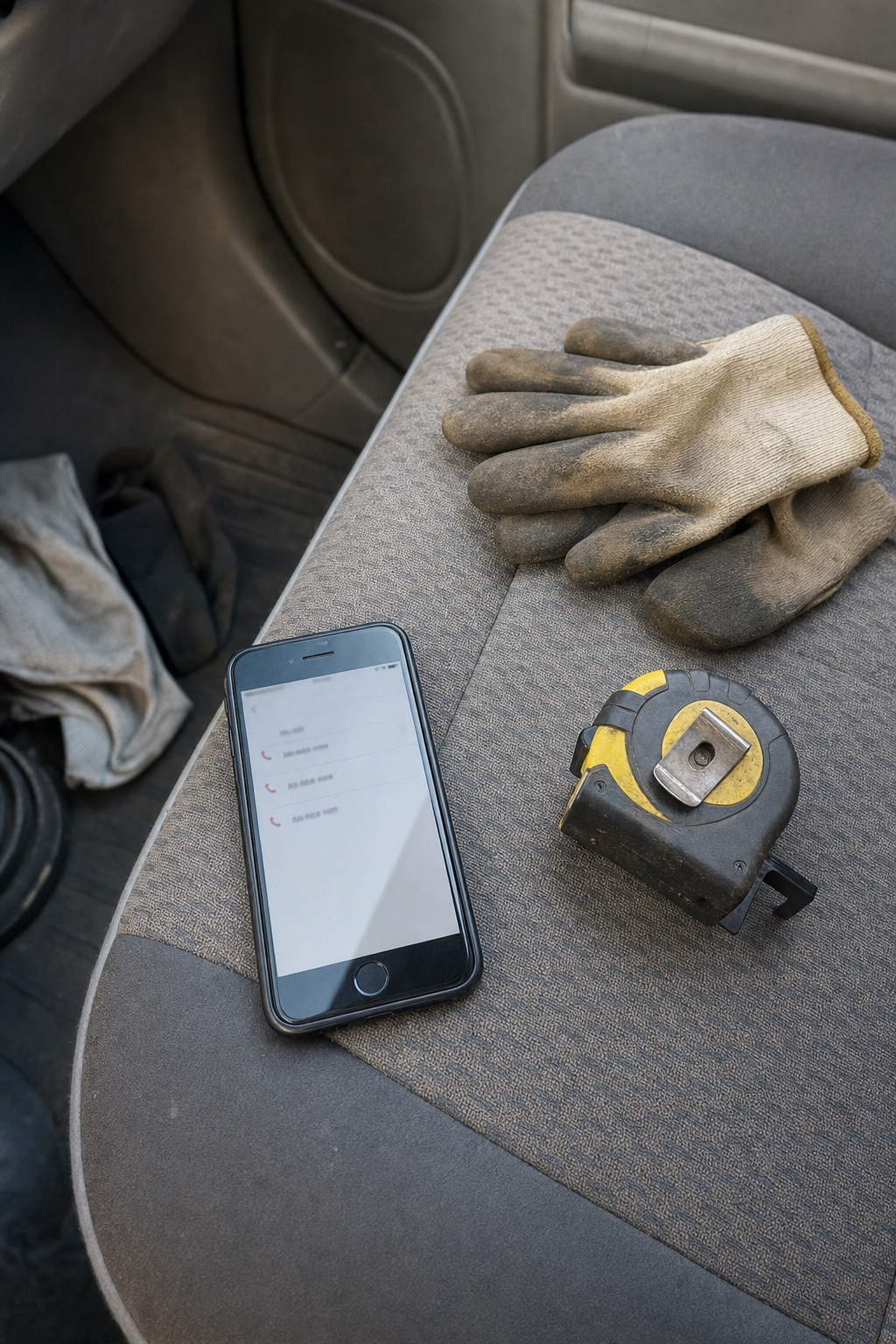
A tradesman misses calls because he is under a sink, on a roof, or driving. That is not a failing, it is the job. The caller does not leave a voicemail, they ring the next number.
What you build: the moment a call goes unanswered, a text message goes back to that number within about ten seconds. That is it. That is the whole system and it is the highest value per line of code in this entire series.
Why a text and not a voice agent. Guide 3 used a voice agent for guest houses because a booking is a considered decision. A leak is not. The customer wants to know somebody exists and will come, and they want it in writing so they can stop searching. A text does that in one exchange and costs a fraction of a voice minute.
How it is wired, end to end
- Buy a Twilio number in their area code.
- They set conditional forwarding on their mobile, so unanswered calls after four or five rings go to that number. Their number does not change and nothing changes for the caller who does get through.
- The number answers, plays a six second message, and hangs up.
- Immediately after, it sends the text on the next page to the caller's number.
- And it sends the tradesman a text saying who rang and when. Both messages matter. The one to the customer stops them searching. The one to the tradesman is what makes him trust the system, because he can see it working from the van.

System 7.2The two messages
These are templates, not model prompts. Fill them in and send them as they are.
--- to the customer, sent within ten seconds of the missed call ---hi, this is {{TRADE_NAME}}. sorry i missed you, i'm on a job.text me what's happening and roughly where you are and i'll come back to you as soon as i'm free.if it's an emergency and you can't wait, say URGENT and i'll ring you the moment i'm out.--- to the tradesman, sent at the same time ---missed call {{TIME}} from {{NUMBER}}. auto text sent.{{NUMBER}} has been called {{CALL_COUNT}} times today.Rules for anyone editing these, and they are not style preferences:- Never say "we". A one man trade is not a we, and the customer can tell.- Never promise a time, a price, a call back window, or a same day visit. Say "as soon as i'm free". Missing a promised time loses the customer permanently and it is your fault, not his.- Never claim to be him. It says "this is {{TRADE_NAME}}" because it is his business texting, but it must never say "i'm just finishing up" or invent a situation.- Keep the URGENT escape hatch. It costs nothing, it takes about one in twenty callers, and it is the only part that handles a genuine emergency honestly.- Do not add a website link, a booking link, a review request, or a signature. This is a text from a plumber, not a marketing message, and the moment it looks like marketing it gets ignored.- Send it once. Never chase, never follow up automatically, never send a second message the next day. That turns a helpful system into the thing everybody hates.
System 7.1The intent catcher
The person typing "boiler not firing" into a phone at nine at night is going to hire somebody in the next twenty minutes.
What intent means here. Most marketing chases people who might one day want something. A trade does not need that. It needs the person who has a problem right now, and that person behaves in a very specific and findable way.
Where they actually are, in order of how well it works for a small trade:
- The local community group. Facebook groups, neighbourhood apps, and in many countries WhatsApp groups for a street or a building. Somebody asks "can anyone recommend a plumber" several times a week in every town on earth. This is the single richest source of live intent for a trade and it is completely free.
- Their own Google listing. A trade with a strong rating that does not appear for the searches that matter is losing work to worse trades who do. That gap is visible and fixable.
- A page per problem, per town. Not a website. One page for one problem:
boiler-not-firing-in-{{TOWN}},emergency-plumber-{{TOWN}}. One paragraph, one phone number, one text button. These rank for exactly the phrase a panicking person types and nothing else.
The part people get wrong and should not
Do not build an automation that posts into community groups. It is spam, groups ban it within a day, and it will get your client's business name banned rather than yours. The catcher tells the tradesman a question was asked and drafts a reply he sends himself, as himself. A real local person answering a real question is the entire value, and automating that away destroys the only thing that was working.
How to find the trades worth selling to
Same call as every other guide. The pattern you want is a high rating with few photographs, because it means the work is good and the proof is thin.
Exampleemergency plumber in {{TOWN}}electrician in {{TOWN}}roofer in {{TOWN}}boiler repair in {{TOWN}}Actual result for Leeds, unedited: Norton Plumbing 5.0 from 252 with 10 photos, Gas & Plumbing Services 5.0 from 144 with 10, Leeds Plumber UK 4.9 from 45 with 3 photos, Dual Flame 5.0 from 7 with 3 photos. The last two are the prospects: excellent ratings, almost no proof, and almost certainly missing calls.
The qualifier
Keep it if rating is 4.7 or higher, review count is between 10 and about 300, and the photo count is under 8.
Drop it if the listing has no phone number, or the name contains a national franchise. And drop anything over about 500 reviews: they have an office, a phone answering service and a marketing budget, and you will spend three weeks getting to the person who decides.
System 7.3The job photo machine
There are four hundred photographs of finished work on that phone and not one of them is usable.
Why this matters to a trade specifically. A customer choosing a plumber for a full bathroom is spending a lot of money with a stranger who will be in their house for a week. Photographs of finished work are the only evidence they have, and every trade's photographs are terrible in exactly the same way.
This is the easiest recurring job in the series. They finish work every week and photograph it anyway. You take the camera roll and hand back a usable set. No new behaviour required from them, which is the reason it survives past month two.
The before and after pair is worth more than either image alone. Ask them for the photo they took before starting, which they almost always have for their own records, and hand back both rebuilt to match. A genuine before and after of real work outperforms anything else a trade can post.
The rule, and it is the same one as the whole series
You may relight, straighten, reframe and remove the tradesman's own clutter: tools, packaging, cleaning products, dust sheets. That is tidying, and a photographer would do it before pressing the button.
You may not change the work. Not the grout lines, not a slightly off level tile, not a silicone bead, not the make of the fittings. A trade's photograph is a claim about the quality of their workmanship, and improving it in software is the one thing that would genuinely damage them. It is also the fastest way to be found out, because the next customer sees the real thing.
Step 5Rebuild a job photograph
gemini-3-pro-image or gpt-image-2, with their own photo
Relight and reshoot this real photograph of finished work by a tradesman, so it looks like it was taken by a professional for a portfolio, while keeping the room and the work completely unchanged.Keep everything about the work exactly as it is: the same materials, the same tiles and the same grout lines, the same fittings and the same brands of fitting, the same fixtures in the same positions, the same paint, the same flooring, the same silicone lines, the same edges and the same joints. If a tile is slightly off level, it stays slightly off level. If a grout line is uneven, it stays uneven. Do not improve, straighten, replace or tidy any part of the actual workmanship. This photograph is a claim about the quality of somebody's work and it must remain true.Keep the room itself unchanged too: the same size and proportions, the same window in the same place, the same door, the same ceiling height.What you may change is only this:- Remove the tradesman's own clutter and consumables: tools, offcuts, packaging, dust sheets, cleaning sprays, cloths, and any personal items left on surfaces. A photographer would clear these before shooting.- Replace the on camera flash with soft natural daylight coming from the window, with a gentle falloff, so the materials show their real texture and colour instead of a flat white glare.- Straighten the verticals so the walls are true, and level the horizon.- Reframe to landscape from a corner at chest height, so the room reads at its real size.The customer who had this work done must recognise their own room, and the tradesman must recognise his own work. Nothing about the finished job may look better than it is.No text, no logos, no watermarks, no borders.
Step 2Pick the trades worth approaching
Any cheap text model
You are screening trades and home service businesses for someone who sells a missed call rescue system, local intent capture, and rebuilt job photographs. You will be given one place record from the Google Places API.Apply these rules in order and stop at the first that fails:1. REJECT if rating is below 4.7. Reason: "the work is the problem, and i cannot fix that".2. REJECT if userRatingCount is below 10. Reason: "too new to judge".3. REJECT if userRatingCount is above 500. Reason: "big enough to have an office and someone already answering the phone".4. REJECT if nationalPhoneNumber is missing. Reason: "no phone, and the phone is the whole system".5. REJECT if the name contains a national franchise or a brand that operates in many towns.If nothing rejects it, ACCEPT and set these flags:- thin_proof: true if the photos array has fewer than 8 entries. Almost always true, and it is the easiest thing to open with because it is not a criticism of their work.- likely_sole_trader: true if the name is a person's name, or the address is residential rather than a trade counter or an industrial unit. Sole traders miss the most calls and benefit most.- has_website: true if websiteUri is present and is their own domain rather than a directory or a social page.Then set lead_with: "missed_call" if likely_sole_trader is true. This is nearly always the right opening, because a sole trader can count the jobs he lost last month. "photos" if likely_sole_trader is false and thin_proof is true. "intent" only if they already have a website and eight or more photographs.Return ONLY this JSON and nothing else:{ "decision": "accept" | "reject", "reason": "one short lowercase sentence", "rating": number, "review_count": number, "photo_count": number, "thin_proof": boolean, "likely_sole_trader": boolean, "has_website": boolean, "lead_with": "missed_call" | "photos" | "intent", "opening_line": "one plain lowercase sentence to say on the phone. it must be about their situation, not about your service, and it must not criticise their work, their photos or their website."}Never invent a number. Everything must come from the record you were given.Here is the place:{{PLACE_JSON}}
Step 8What to say when you ring them
Any text model. This is a call script, not a message.
Write a short telephone opening for calling a tradesman directly, from someone offering to set up a missed call rescue system for them.Facts you may use, and nothing else:- their trade: {{TRADE}}- their business name: {{BUSINESS_NAME}}- their rating and review count: {{RATING}} from {{REVIEW_COUNT}}- what you are offering: {{OFFER}}Rules:- Under 40 words for the opening. He is probably in a van or on a job.- Written to be spoken aloud, not read. Contractions, plain words, no clauses.- No em dashes.- Open by saying who you are and that you will be quick. Then ask one question and stop talking.- The question must be about something he already knows and thinks about: how many calls he misses in a week. Not about marketing, not about his website, not about his brand.- Never say: solution, service, platform, system, automation, AI, digital, presence, funnel, strategy, or "how are you doing today".- Never criticise his photographs, his listing, or his website in the opening. That comes later if at all.- Offer to set the first one up free and to leave it running whether or not he pays. Mean it.- If he says he is busy, the correct response is to ask when to ring back and then go. Do not push.Also write the two follow ups:1. What to say if he asks how much it costs, in one sentence, without naming a figure but without dodging.2. What to say if he says he does not miss many calls, in one sentence, without arguing with him.Return the opening and the two follow ups, labelled, and nothing else.
What that gives you:
hi, is that dave? my name's chris, i'll be thirty seconds. how many calls would you say you miss in a week when you're on a job?The app, charging, and what breaks
How to charge
A flat monthly, per trade, and keep it simple enough to say in one breath. This trade will not sign anything with tiers, usage bands or per lead pricing. One number, one month at a time, cancel whenever.
Set the first one up free and leave it running. A fortnight of it working, with the recovered calls visible, sells better than any explanation. And if they do not pay, leave it on anyway: it costs you almost nothing and tradesmen talk to each other constantly.
Photographs are a separate small monthly, per batch, once the phone system has already proved itself.
Before you turn on the first one
- Forwarding is conditional, so if he picks up, nothing happens
- The text arrives within about ten seconds. Test it fifteen times, from different phones
- It never sends twice to the same number in one day
- It does not fire for calls he made that were not answered
- The message promises no time, no price and no qualification
- He has read the exact wording and approved it, in writing, before it goes live
What breaks
It texts other tradesmen. The merchant rings, the electrician rings, his wife rings. All get an automated text and it makes him look daft. Build a do not text list from day one and add every number he tells you.
It fires on withheld numbers and fails silently, or worse, texts a landline that cannot receive it. Check the number is mobile before sending.
He forgets it exists and does not credit it for the work it recovered. This is why the monthly summary matters more than the dashboard.
What I have not tested
The Places searches and the bathroom rebuild were run live against the real business named. I have not stood up a Twilio number, run a real missed call, or sent a rescue text to anyone. The wiring and the message templates are written from how these services work, not from a system I have run in production. Norton Plumbing, Leeds Plumber UK and Dual Flame are real businesses used as public examples and have no idea this guide exists.
Country notes
The missed call rescue is the most universal system in these seven guides. Every country has trades, every trade misses calls, and SMS works everywhere. The only variable is the cost of a message and the ease of buying a local number, which is straightforward in North America and Europe and harder in parts of Asia, Africa and Latin America where local registration is required.
Where SMS is not the norm, use WhatsApp, which in most of Latin America, India, Indonesia, Nigeria and the Middle East is how a trade is contacted in the first place. The system gets simpler, not harder: the missed call still triggers, and the reply goes to a channel the customer already lives in.
One thing to check wherever you are
An automated text to someone who just rang you is a response to their contact, not a marketing message, and that distinction is what keeps it lawful in most places. So keep it that way: send it only to a number that just called, send it once, never add an offer, never add a link, and never message that number again unless they reply. The moment it becomes a marketing send you have created a compliance problem for your client in almost every jurisdiction on earth. The honest version is also the safe one, and it works better.