
Lead gen systems · Guide 06 of 07
Storefront photos for shops
Three systems for independent shops: show the owner their own frontage in good light, show them what it looks like lit after dark, and turn one product into an advert. Everything here works anywhere in the world and every prompt is written out in full.
8 min read8 steps4 promptsfree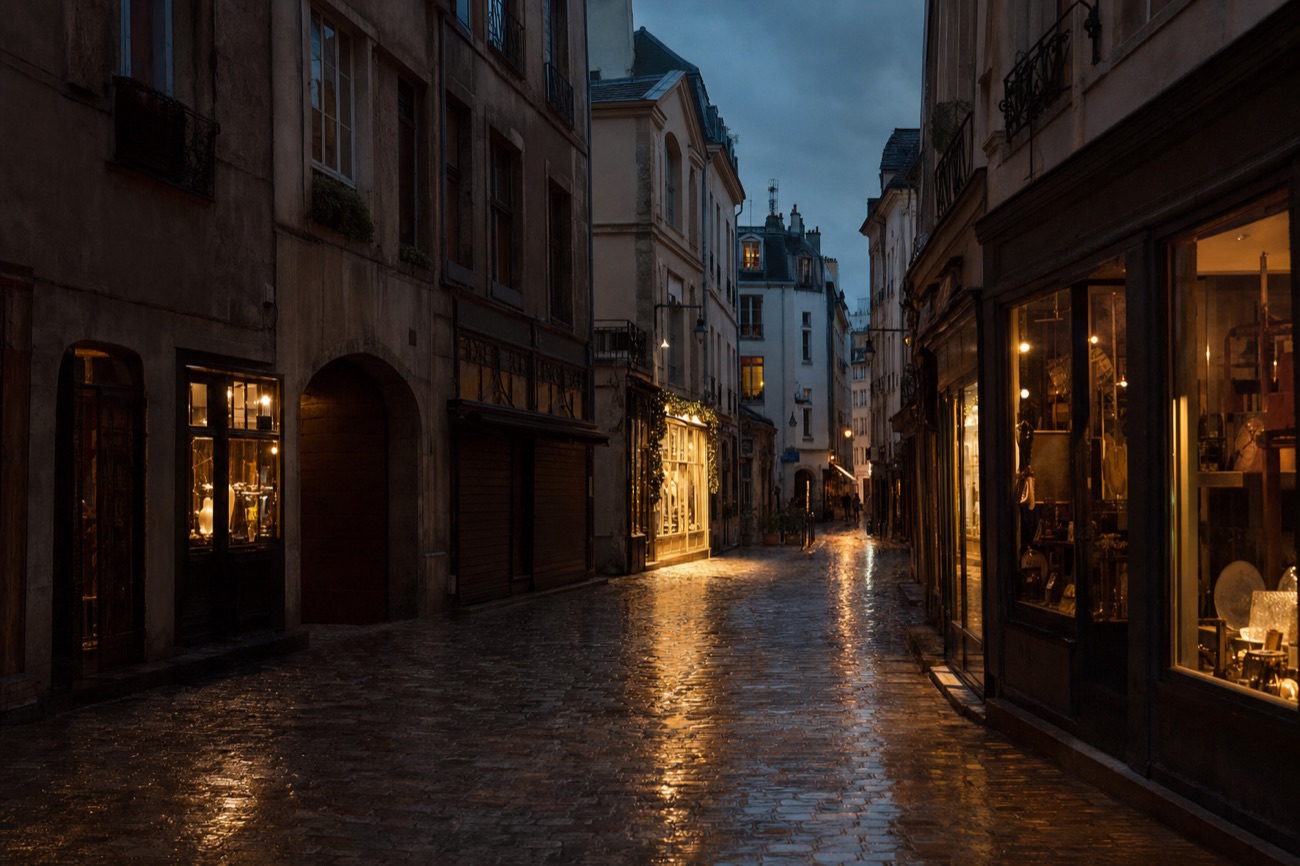
What this is, and how it works
An independent shop is judged on one photograph taken by a stranger on a phone on the worst weather day of the year, and the owner has no idea it is the first thing anybody sees.
This is the same shape as the restaurants guide, with one difference that makes it easier: a shop's frontage is public, permanent and photographable by anyone. You do not need their cooperation, their photos or their permission to demonstrate what you can do. It is standing on a street.
And the emotional pull is stronger than in any other guide. A shopkeeper who has stood behind that counter for thirty years, shown their own shop looking the way they think of it in their head, reacts in a way no solar installer ever will.
The three systems, and who each one is really for
6.1 the glow up is the opener. Everybody qualifies, it costs one image, and it is the thing that gets a reply.
6.2 the night render is the one that makes money, and not from the shop. It makes money because you sell it to a sign company or an electrician as the thing that closes their quotes. That is the real business in this guide and most people miss it.
6.3 the product engine is the recurring work, for the shops that sell things worth photographing.
The eight steps, same as every guide
- 1Find independent shops in one street or quarter.
- 2Qualify on a visible flaw in the listing.
- 3Capture their own photo, or Street View.
- 4Work out what is honest to change.
- 5Rebuild the frontage, the lighting, or the product.
- 6Put it beside the original.
- 7Look at it yourself and approve it.
- 8Walk in and hand it over.
That last step is not a metaphor. This is the one guide in the series where the best delivery channel is your feet. A printed A4 of their own shop, handed across the counter on a Tuesday afternoon, outperforms every message you could send.
The rule, and it matters more here than anywhere
You may change the light, the weather, the time of day and the frame. You may clean the pavement and remove a dead wire. You may not repaint the shop, redesign the sign, replace the windows, remove the neighbouring businesses or take away the sixty years of accumulated character that is the entire reason anybody goes there. A glow up that modernises an old shop is an insult with good intentions, and the owner will hear it as one.
The example, and it is real
Costa & Costa, Lda, Rua João das Regras 1, Lisbon. An ironmonger with 4.3 stars from 86 reviews, no website, and a hand painted black and gold fascia that says 100 anos in the window. Every image of it in this guide is built from its own Google listing photograph.
What you need, and how to find them
| Account | What it is for | Free tier | Card |
|---|---|---|---|
| Google Cloud | Finding the shops and pulling their photographs. Places API (New), plus Street View Static for anywhere the listing photo is bad. | 10,000 calls a month per tier, and Street View metadata is free | Yes |
| An image model | All three systems | Per image | Yes |
| A colour printer, or a print shop | The delivery channel. A4, decent paper. | Pennies per sheet | No |
Street View is your safety net here. If a shop's listing photograph is unusable, you can nearly always get a clean frontage from the street, at a time of day you choose, for free. Use the metadata call first because it costs nothing and tells you whether a panorama exists and how old it is.
# free, no quota consumedcurl "https://maps.googleapis.com/maps/api/streetview/metadata\?location={{LAT}},{{LNG}}&radius=40&source=outdoor&key=YOUR_KEY"# then the image, pointed at the shopcurl -o front.jpg "https://maps.googleapis.com/maps/api/streetview\?size=640x640&location={{LAT}},{{LNG}}&heading={{BEARING}}\&pitch=8&fov=70&return_error_code=true&key=YOUR_KEY"
The searches, one quarter of one town at a time: hardware shop in {{TOWN}} · independent butcher in {{TOWN}} · florist in {{TOWN}} · bookshop in {{TOWN}} · barber in {{TOWN}} · haberdashery in {{TOWN}}. Old trades on old streets. The more specific and old fashioned the search term, the better the prospect.
The real result set
Actual output of
hardware shop in Lisbon Portugal, unedited:
Shop Rating Reviews Website Leroy Merlin 4.2 2,554 Yes Mário Mendes 4.6 440 Yes Costa & Costa 4.3 86 None Porfírio da Silva Xavier 4.7 546 None Ferragens do Combro 4.6 16 None The chain is at the top and is useless to you. The three with no website are all decades old, all independent, and all reachable by walking in.
The qualifier
Keep it if the rating is 4.0 or higher, the review count is under about 600, and it is unmistakably independent: one location, a family name in the title, or a trade word that no chain would use.
The strongest signal of all is
websiteUrimissing. A shop with no website is a shop whose entire online presence is one listing and four photographs, which means the photograph you rebuild is not part of their shop window. It is their shop window.
System 6.1 · 6.2The glow up, and the night sign render
Same shop, better day. Then the same shop after dark with the lights it does not have yet.
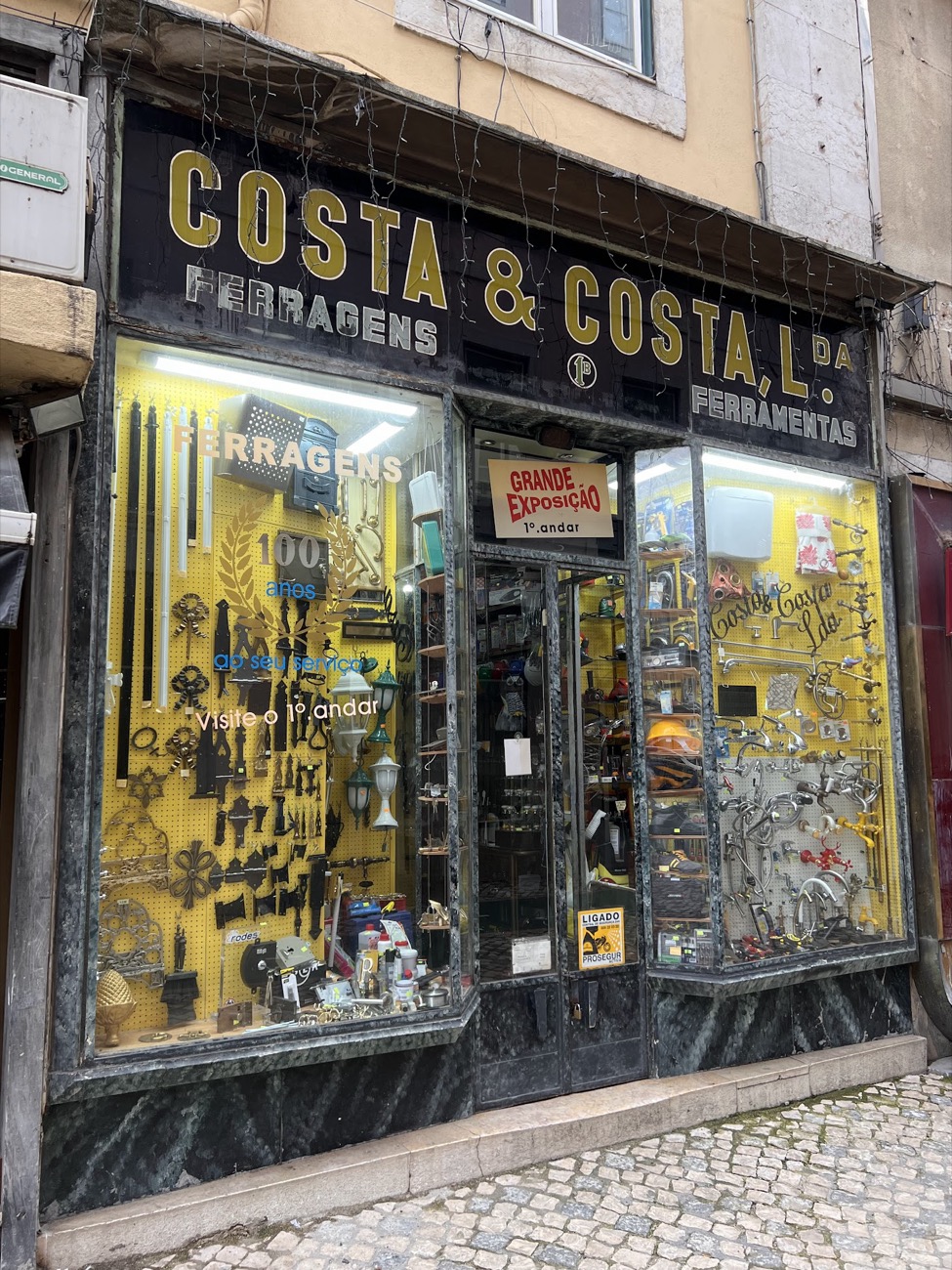
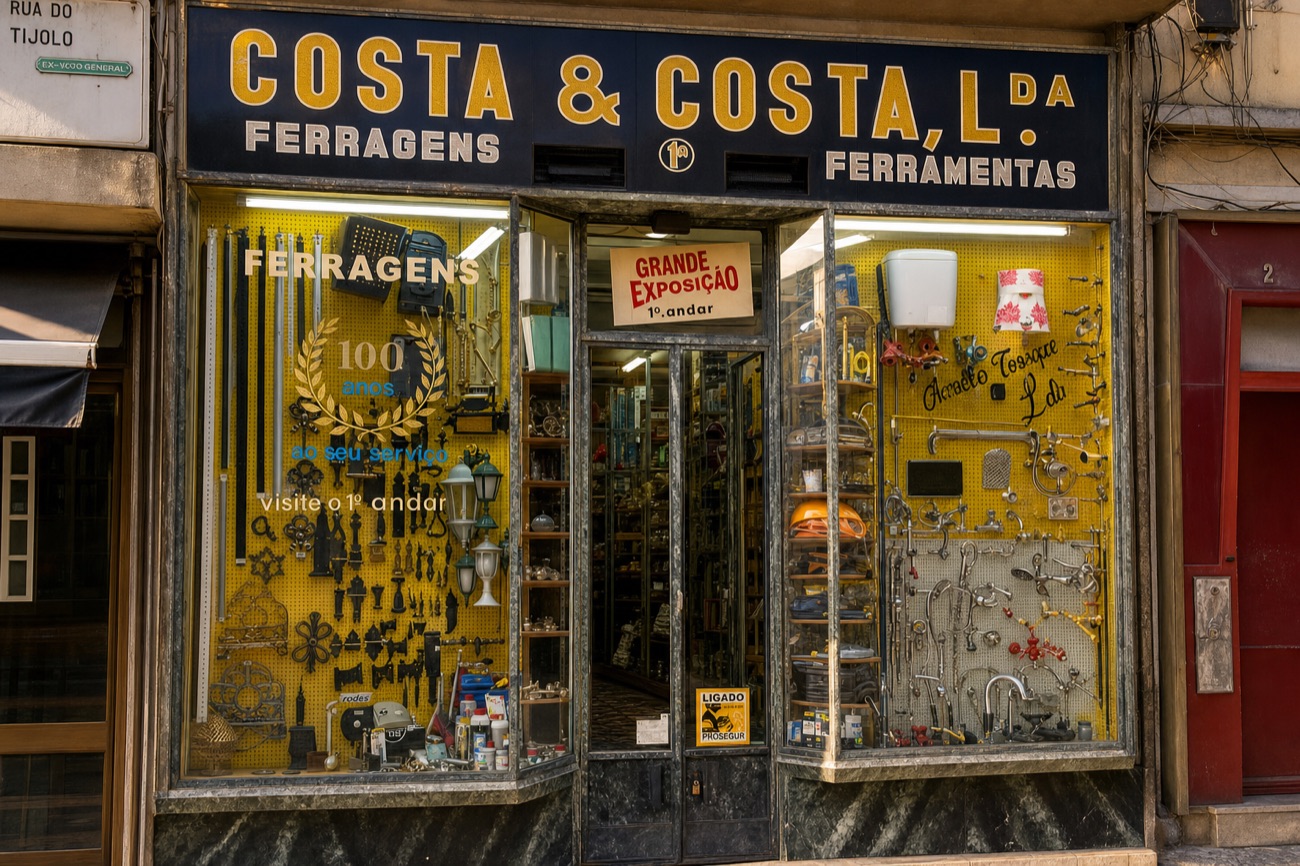
6.1 is the opener and it should stay free, always. One image, printed, handed over. It costs you the price of a coffee and it is the only reliable way to start a conversation with a shopkeeper who has been sold to a hundred times.
What you are actually selling afterwards is the photo set: four images they can put on the listing, the door, a flyer, a market stall sign. The glow up demonstrates you can do it. The set is the job.
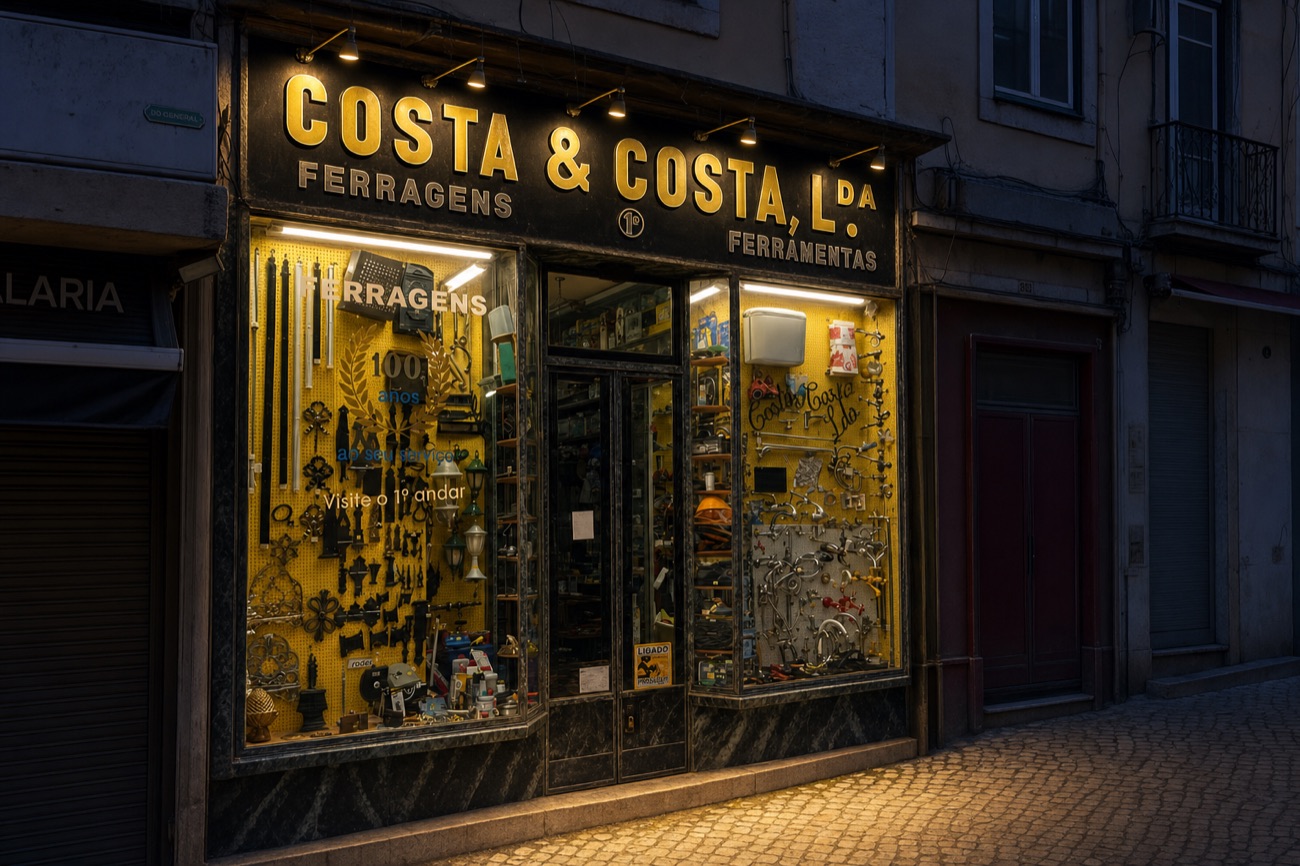
6.2The night render, and who really buys it
A lit shopfront doubles the hours it is visible and every shopkeeper on a dark high street knows it. What stops them is that lighting is a real cost and they cannot picture the result.
So do not sell it to the shop. Sell it to the sign company, the shopfitter or the electrician who quotes for that work. They lose jobs at exactly the moment the customer cannot imagine the outcome, and a render closes it. One sign company can send you every quote they write, forever, which is a far better business than one shop at a time.
The restraint rule for night renders
Light what is already there. The fascia, the windows, the doorway. Do not add signage, do not add colour, do not add a glow that no fitting produces, and never make the shop brighter than the street around it. An over lit render is easy to spot and it makes the quote look dishonest, which is the opposite of what your buyer needs it to do.
The prompts, and the product engine
6.3The product to ad engine
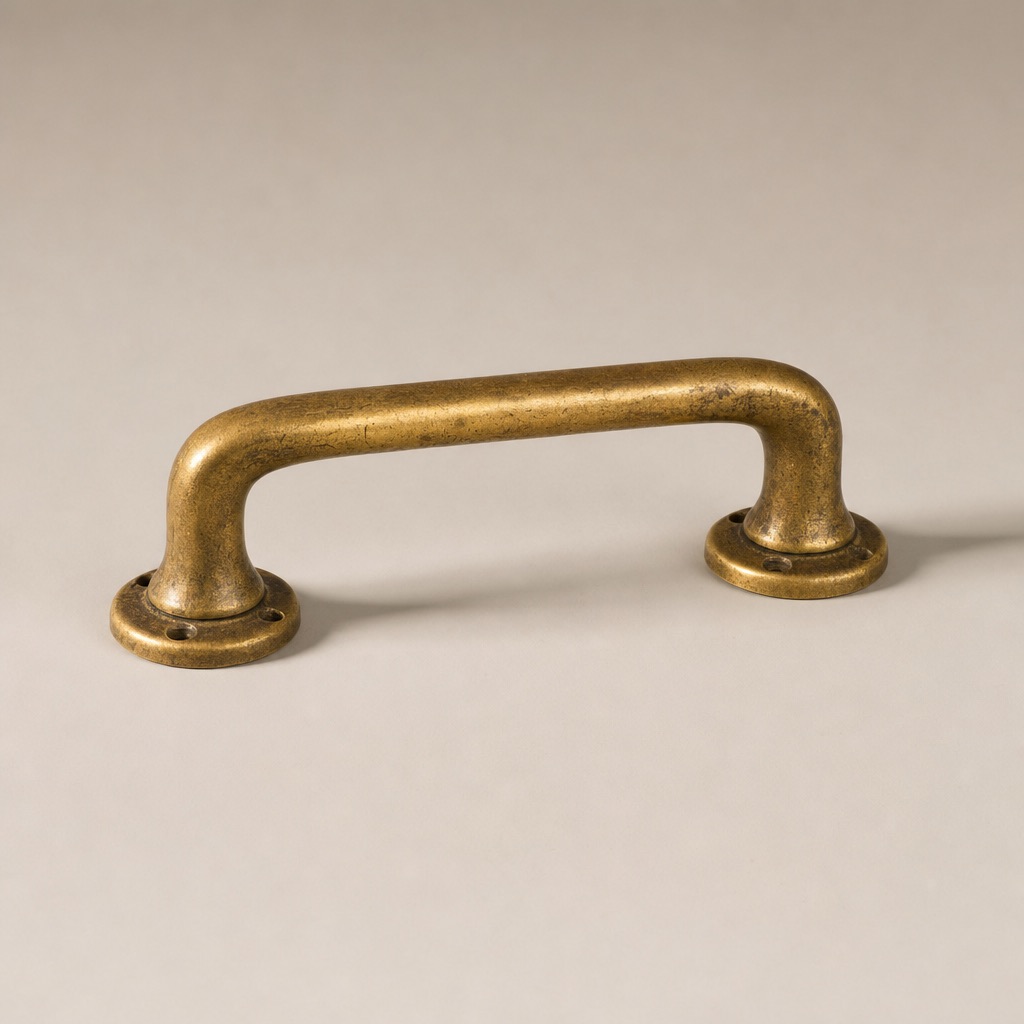
A shop that sells objects worth looking at has, at best, a photograph of a shelf. One product, photographed properly on a plain background, is a thing they can post, print, put in a window or hand to a supplier.
This is the recurring work in this guide. A frontage is done once. Products are weekly, and a shop with a hundred lines never runs out.
And it is the easiest to sell of the three, because the shopkeeper can hold the object and the photograph side by side and see immediately whether it is honest.
Step 5The storefront glow up
gemini-3-pro-image or gpt-image-2, with their real photo or a Street View frame
Relight and reshoot this real photograph of {{SHOP_NAME}}, an independent shop at {{ADDRESS}}, so it looks like it was taken by a professional, while keeping it unmistakably the same shop.Keep every part of the building and the shop exactly as it is: the fascia and its existing lettering in the existing typeface and colours, the signage, the windows and every single item displayed in them, the door, the stall risers, the paintwork including where it is worn, the materials, the neighbouring shopfronts on both sides, and the pavement.Do not modernise anything. Do not redesign or clean up the sign. Do not repaint. Do not tidy or restyle the window displays. Do not remove products. Do not remove the neighbouring businesses. Do not add plants, seating, awnings, people or lighting that are not already there. If the shop looks old, it must still look exactly that old afterwards.What you may change is only this:- The light. Move it to warm late afternoon sun coming along the street, so the frontage is lit and the materials have modelling, instead of flat overcast grey.- The frame. Straighten the verticals, level the horizon, and crop tighter so the shopfront fills the frame with the empty road reduced.- The shadows inside the windows, lifted just enough that the displayed products read.- Genuine dirt and disorder that is not part of the shop: litter on the pavement, tangled dead wiring across the fascia, grime streaks on the render above the sign. These may go.The owner of this shop must look at the result and see their own shop on a nice day. If they would say "you have changed my sign" or "that is not my shop", you have gone too far.No text changes, no added logos, no watermarks, no borders.
Step 5The night sign render
Same models, the same daytime photo
Show this same real shopfront at night, after a simple and restrained lighting scheme has been installed, as a sign company would preview it for the owner before quoting.Keep the building, the fascia and its exact existing lettering, the materials, the windows and their contents, the door and the neighbouring buildings all exactly as they are. Do not change the sign design, do not add new signage, do not add a logo, and do not alter the shopfront in any way.The scene is blue hour, shortly after sunset, with the street in deep soft blue shadow and no direct sun anywhere.The lighting to show, and nothing beyond it:- Discreet warm white downlights on slim arms above the fascia, so the existing lettering is lit from above and reads clearly, while the background of the sign stays dark.- The window displays lit warmly from inside, so they read as bright boxes from across the street.- One soft warm pool of light on the ground in front of the door.Everything else on the street stays dim and unlit. The shop must be the brightest thing in the frame, but only a little, the way a well lit shop actually looks. No neon, no colour wash, no uplighting, no glow around the building, no light sources visible as flares, and no light falling where a real fitting could not put it.It must look like a photograph taken after the work was done, restrained enough that the quote it accompanies looks honest.No text, no logos, no watermarks.
Step 5One product, photographed properly
Same models, a phone snap of the object
Reshoot this photograph of a single product so it looks like a proper product photograph, while keeping the object itself completely unchanged.Keep the object exactly as it is: the same shape, the same size and proportions, the same material, the same colour, the same finish, the same wear, the same patina, the same manufacturing marks and the same imperfections. Do not clean it, do not polish it, do not repair it, do not straighten it and do not replace it with a newer or different version of the same thing. If it is old and worn, the photograph must show something old and worn.What you may change is everything around it:- Place it alone on a plain, seamless surface in {{BACKGROUND_COLOUR}}, with the background the same colour so there is no visible horizon line.- Light it with one soft directional light from the upper left, giving a gentle highlight along its top edge and a soft shadow falling to the lower right.- Frame it centred with generous space around it, shot at eye level to the object.- Keep the colours true. Do not increase saturation or contrast beyond what makes the material read correctly.Nothing else may be in the frame. No props, no hands, no packaging, no reflections of a studio, no other products.The result should look calm and expensive and completely honest: the sort of photograph a good shop takes of its own stock, not an advert.No text, no logos, no watermarks, no borders.
Step 8What to say, and this one is mostly spoken
Any text model, for the printed note or the DM
Write the few lines that go with a rebuilt photograph of somebody's shop, which is being handed to them printed, in person, or sent as an instagram message.Facts you may use, and nothing else:- shop name: {{SHOP_NAME}}- what kind of shop: {{SHOP_TYPE}}- what you rebuilt: {{WHAT}}- how long they have been there, only if it is stated publicly: {{YEARS}}- the channel: {{CHANNEL}}, either "printed" or "instagram"Rules:- Under 45 words. If it is printed, under 30.- All lowercase is fine. Warm, plain, unhurried. This is a person who has stood in that shop for years and is being handed a picture of it.- No em dashes.- Open by saying it is their shop and that the picture is theirs to keep, free.- Say plainly that you changed only the light, and that you did not touch the sign. This is the sentence that matters most in this whole guide. Shopkeepers are protective of their frontage and the fear is that you have modernised it.- Do not mention their rating, their review count, or their lack of a website. It reads as criticism of something they are already sensitive about.- Do not offer a service, a package, a call or a website build.- End with one simple question, ideally about whether they want the other angles.- Never use: transform, elevate, refresh, revitalise, modernise, hidden gem, deserve, boost, I hope this finds you well.Return only the text.
What that gives you, printed and handed over:
this is your shop on a sunny afternoon. only the light is different, i have not touched the sign. it is yours, keep it. want me to do the other side of the window?The app, charging, and what breaks
How to charge
The glow up is free, forever. It is the cost of starting a conversation and it should never appear on an invoice.
The photo set is a job. Four images of the frontage and the interior, fixed price, done once.
Product photography is per item, in batches, and this is the recurring revenue from shops.
The night renders are the real business and you sell them to a sign company, an electrician or a shopfitter, per quote, on a monthly. One trade client can be worth more than twenty shops and takes a tenth of the work.
Before you hand over the first one
- The sign is pixel for pixel the same sign. Hold the before and after side by side and check the lettering
- The neighbouring shops are still there and unchanged
- Nothing has been added to the frontage that was not there
- You have printed one and looked at it on paper, not on a screen
- You know what time the shop is quiet, and it is not lunchtime
What breaks
The model redesigns the sign. The failure that ends the conversation. It will subtly modernise a hand painted fascia, straighten hand lettering, or replace a typeface with something cleaner. This is the single thing to check every time.
The shop gets gentrified. The model adds a planter, a bench, a chalkboard, a bicycle. All of it reads as "your shop would be better if it were a different shop".
Street View is out of date. The shop may have changed hands or closed. Check the panorama date, and check the listing is still marked open, before you walk in with a picture of somebody else's business.
What I have not tested
The Places search and the frontage rebuild were run live against the real shop named. I have not made a night render for a real sign company, sold a product set, or walked into any of these shops. Costa & Costa is a real business used as a public example and has no idea this guide exists.
Country notes
This is the most portable guide in the series. Every country has old independent shops on old streets, photographed badly, and Google Places and Street View cover almost all of them.
What varies is Street View coverage, which is thin or absent in parts of central and eastern Europe, much of Africa, and a number of countries where it has never been driven. Where it is missing, the listing photograph is your only source, and you may have to walk past and take one yourself. Which, for this guide, is not much of a hardship.
And the one cultural thing worth knowing
In southern Europe, Latin America, North Africa and much of Asia, walking in and handing something over is normal and welcome, and an emailed pitch is strange. In northern Europe and North America it is closer to the reverse, and turning up unannounced can read as pressure. The work is identical. The delivery is not. If you are unsure which you are in, print it anyway and post it through the door with a note, which is welcome everywhere and costs a stamp.