
Lead gen systems · Guide 04 of 07
Listing staging for agents
Three systems for estate agents: find the listings that have gone stale, show the agent what the empty rooms could look like, and turn the photographs into a film. Everything here works anywhere in the world and every prompt is written out in full.
11 min read8 steps4 promptsfree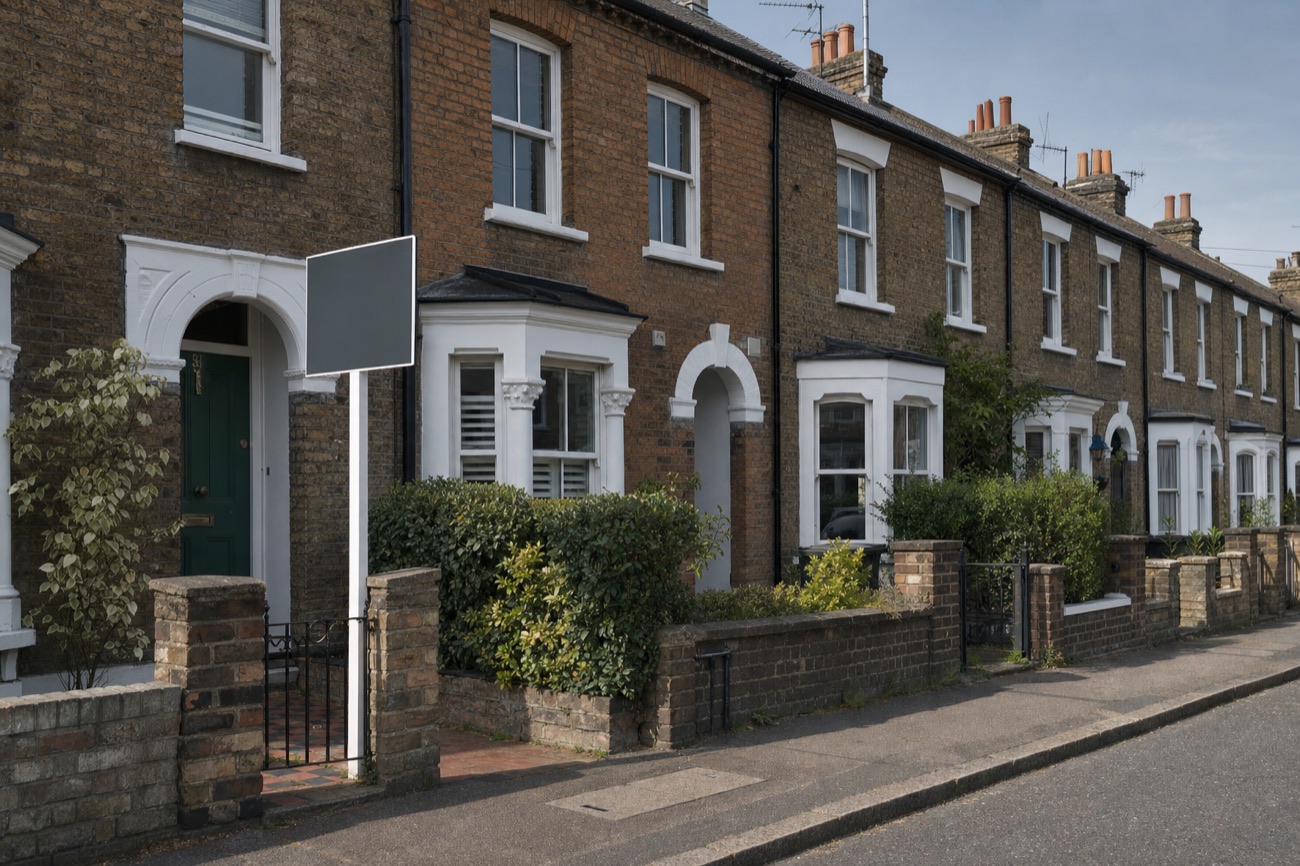
What this is, and how it works
An estate agent with a listing that has sat for four months has a problem they cannot ignore, cannot hide from the seller, and are actively looking to solve this week.
That is what makes this industry different from the rest of the series. Everywhere else you are finding a flaw the owner has not noticed. Here you are finding a flaw that is already causing them a difficult phone call every Friday with a vendor asking why their house has not sold.
So the opening is not "your photos could be better". It is "this one has been up since March, here is what it looks like staged". The specificity is the product.
The three systems, and how they fit together
4.3 finds the prospect, by watching which listings go stale or take a price cut. 4.2 is what you send, because an empty room staged is the single most persuasive thing you can put in front of an agent. 4.1 is what you sell after they say yes, because film is the recurring work.
Build them in that order and each one feeds the next.
The eight steps, same as every guide
- 1Find agents and their live listings in one town.
- 2Qualify on time on market or a price reduction.
- 3Capture the listing photographs.
- 4Work out the honest numbers.
- 5Rebuild the room, or the film.
- 6Put it beside the original.
- 7Look at it yourself and approve it.
- 8Send it to the named agent, not the office.
Why the agent, and not the seller
Never contact the vendor. It is the fastest way to be blacklisted by every agent in the town, it is unpleasant, and in several countries it is a regulatory problem for the agent you are trying to sell to. The agent is the buyer, the agent has the budget, and the agent has thirty more listings behind this one.
The rule that keeps you out of trouble, and it is a hard one here
A staged room must be obviously staged. Every serious property portal requires virtual staging to be labelled, and several regulators treat an unlabelled staged photograph as a misrepresentation. So you burn the label into the image itself, in the corner, in plain words, before you send it. Not in a caption that gets stripped when the picture is uploaded. In the pixels. This is not a formality, it is the difference between a useful tool and a liability you handed your client.
And never remove anything structural
You may add furniture to an empty room. You may not remove a radiator, hide a damp patch, straighten a sagging ceiling, widen a room, add a window, or take out the pole in the middle of the floor. Adding furniture to an empty room is staging. Removing a defect is fraud, and the person who gets sued is the agent whose name is on the listing.
What you need, and the stale listing radar
Fewer accounts than any other guide in the series, because the hard part here is not an API, it is watching a portal over time.
| Account | What it is for | Free tier | Card |
|---|---|---|---|
| Google Cloud | Finding the estate agents themselves, with names and phone numbers. Places API (New). | 10,000 calls a month per tier | Yes |
| An image model | Staging the empty rooms | Per image | Yes |
| An image to video model | The listing films | Per second of output, and this is the expensive one | Yes |
| Supabase | Holding a snapshot of every listing, every day. This is the whole radar. | 500 MB, plenty for text | No |
4.3The stale listing radar, and how it really works
There is no worldwide property API, and anyone who tells you otherwise is selling one that covers one country. What there is, in every country, is a dominant portal: Rightmove or Zoopla in the UK, Zillow or Realtor in the US, idealista in Spain and Italy, SeLoger in France, Domain in Australia, Funda in the Netherlands, and so on.
So the radar is not a lookup, it is a diary. Once a day you take a snapshot of the listings in one postcode and store it. The signal is not in any single day, it is in the difference between today and thirty days ago.
The three signals, in order of how well they work
- A price reduction. By far the strongest. It is a public admission that the listing is not working, it is dated, and it means the agent has just had an uncomfortable conversation with the vendor. Contact them that week.
- Days on market past the local median. Work out the median for that town from your own snapshots rather than trusting a published figure. Anything past about double the median is a listing in trouble.
- Thin or empty photography. Fewer than eight photographs, or photographs of an empty property. An empty property that is not selling is the single best prospect in this guide, because staging is the obvious fix and you can demonstrate it in one image.
Scrape politely, or do not scrape at all
Portals do not like being scraped and several forbid it in their terms. So: read the robots file and honour it, take one snapshot a day and not one an hour, identify yourself in the user agent, never resell the data, and store only what you need to spot the change. If a portal offers a feed or a partner API, use that instead and stop reading this box.
The safest version of this whole system, and the one I would start with, uses no scraping at all: watch the listings of six agents you actually want as clients, by eye, once a week, on their own websites. Thirty minutes a week, no legal question, and it is enough to keep a pipeline full while you are learning what to say.
Step 1Find the agents themselves, with a named person to write to
curl -X POST 'https://places.googleapis.com/v1/places:searchText' \ -H 'Content-Type: application/json' -H "X-Goog-Api-Key: YOUR_KEY" \ -H 'X-Goog-FieldMask: places.id,places.displayName,places.formattedAddress,\places.rating,places.userRatingCount,places.websiteUri,places.nationalPhoneNumber' \ -d '{"textQuery":"independent estate agent in {{TOWN}}","pageSize":20}'# then open each website and find the name of a person, not an info@ address.# in this industry the message has to go to a human who owns listings.# a negotiator or a branch manager will read it. an info@ inbox will not.
System 4.2Virtual staging
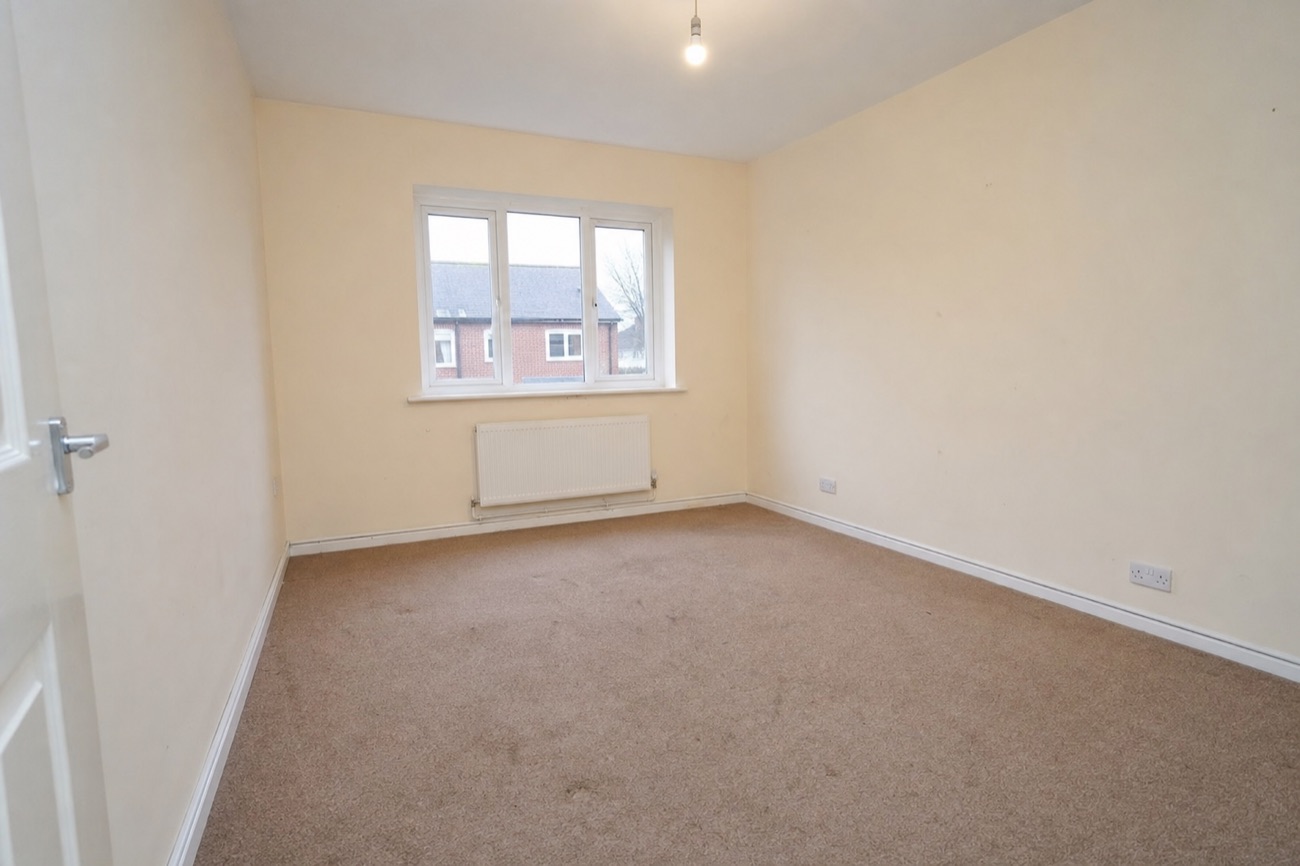
An empty room is the hardest thing in the world to sell, and the easiest thing in this series to fix.
Why it works on the agent rather than the buyer. The agent already knows the room shows badly. What they do not have is a way to prove to the vendor that the room is fine and the presentation is the problem. You are handing them an argument, not a picture.
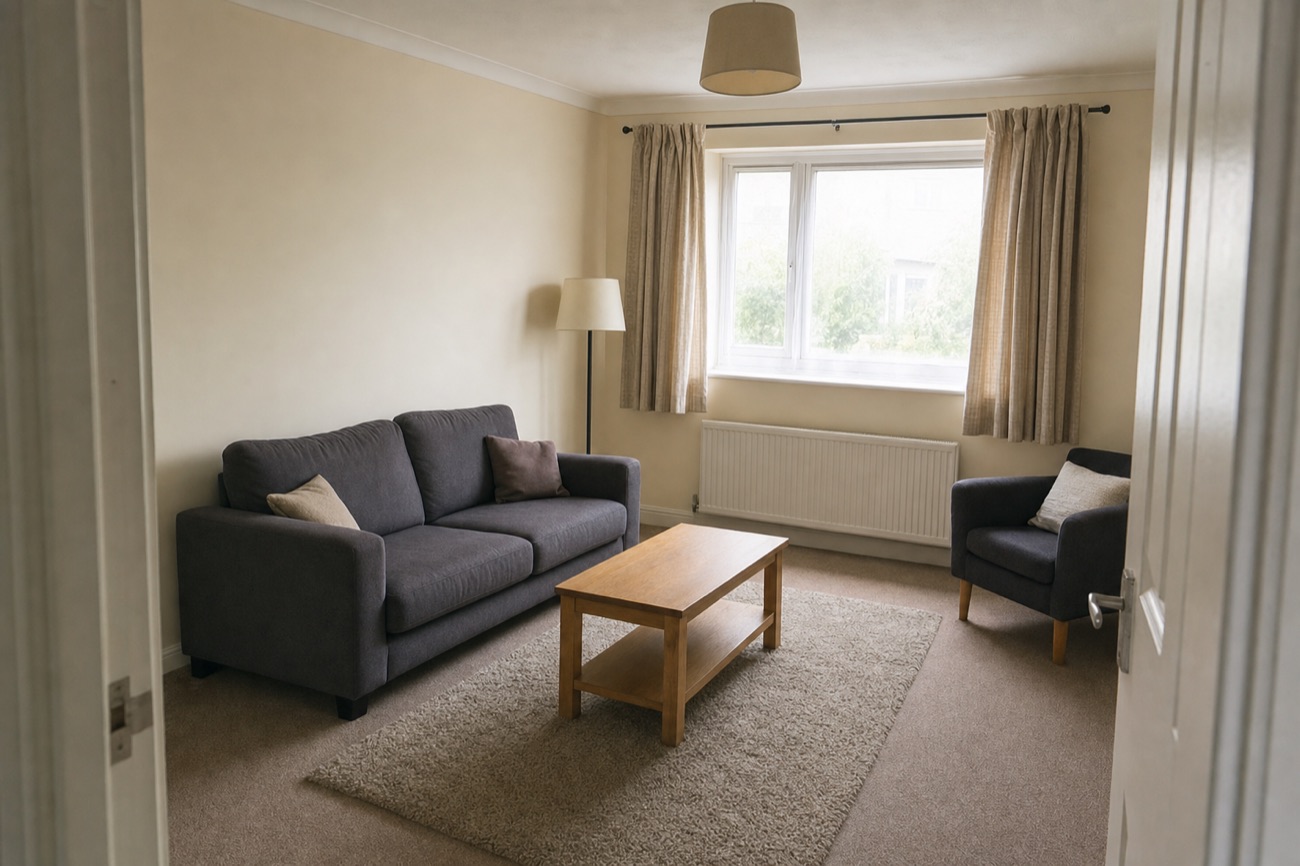
The taste rule, and it is the one people get wrong. Stage it to match the house, not to look impressive. A modest terrace gets a modest sofa. The moment the furniture is more expensive than the property, the picture stops helping and starts making the real room look disappointing.
One room, not eight. Send the main reception room only. A full set looks like a service being sold. One room looks like somebody thought about their listing, which is the thing that gets a reply.
The label, and where it goes
Every major portal requires virtually staged photographs to be disclosed, and the disclosure has to survive being uploaded. So it goes into the image, bottom corner, plain and legible at thumbnail size:
virtually staged. Two words.Agents will sometimes ask you to take it off. The answer is no, and the reason you give is that it protects them: an unlabelled staged photo is the agent's regulatory problem, not yours, and they will not thank you for it when a buyer complains. An agent who insists is telling you what they are like to work with.
Step 5Stage one empty room
gemini-3-pro-image or gpt-image-2, with the real listing photo
Furnish this real photograph of an empty room in a property that is for sale, as a virtual staging service would, while keeping the room itself completely unchanged.Do not change the room in any way. Keep the exact wall positions and proportions, the ceiling height, the window in the same place and at the same size, the door, the radiator, the light fitting, the skirting, the flooring and its colour, and every mark, socket and imperfection on the walls. Do not widen the room, do not raise the ceiling, do not straighten anything that is crooked, do not repaint, do not re-carpet, and do not remove or hide anything that is there. If there is a defect visible, it stays visible.Add only furniture, and only this much: {{FURNITURE_LIST}}.The furniture must suit the property. It should look like it was bought by an ordinary household who lives in a house like this one, not styled by a magazine. Nothing designer, nothing oversized, nothing brightly coloured, no gallery walls, no styled bookshelves, no bowls of lemons. Leave generous empty floor so the room still reads as large.Everything must sit correctly in the space: legs on the floor, correct scale against the door and the window, shadows falling the same way as the existing light in the photograph, and reflections consistent with the real light source.Keep the original camera position and framing. Relight only enough that the added furniture matches the room, without changing the character of the light.Finally, print the words "virtually staged" in small plain lettering in the bottom left corner of the image, in a neutral colour, legible but unobtrusive, as a permanent part of the picture.No other text, no logos, no watermarks, no borders.
System 4.1Listing to film
The twenty photographs the agent already paid for, turned into the thing the portal ranks and the buyer actually watches.
What it is. A forty to sixty second film built entirely from the listing photographs that already exist. No filming, no visit, no drone, no crew. Each photograph becomes a slow four second move, cut together in the order a person would walk the house.
Why the agent wants it. Portals push video, social rewards it, and vendors ask for it. What agents do not have is a way to produce one for a two bedroom flat where the fee does not justify a videographer. That is the entire gap and it is most of their stock.
The order matters more than the effects. Outside, hall, main reception, kitchen, then bedrooms largest first, then bathroom, then garden, then back to outside. That is the order an estate agent walks a viewer round a house, and it is the order that makes a film feel like a viewing rather than a slideshow.
No music, no captions, no transitions. Agents put their own branding on it and licensing music you do not own is a genuine problem for them. Hand over the clean cut and let them add what they want.
This is the recurring revenue in this guide. Staging is occasional, films are every listing, every month, forever. Sell the staging to get in and the films to stay in.
The move, per shot, and it never varies
Exteriors · A slow push in, straight forward, no tilt.
Rooms · A slow drift left or right, parallel to the wall, so the eye reads the depth.
Kitchens and bathrooms · A slow push in toward the work surface.
Gardens · A slow rise, but only a little.
Alternate the direction of the drift between consecutive rooms, or the film feels like it is sliding sideways off the screen. That one detail is the difference between a cut that feels calm and one that feels cheap.
The cost, and why you must check it before you quote
Video models bill per second of output and it adds up much faster than image work. A sixty second film is fifteen four second clips, and if a third of them come back with a defect you are paying for twenty. Work out your real cost on one complete house before you put a price on anything, and price per property rather than per second so the risk of a reroll sits with you and not in an awkward conversation.
Step 5One shot of the film
Any image to video model. Run once per listing photograph.
Animate this property photograph into a single slow, steady, continuous camera move, as though shot on a gimbal by someone moving carefully through the house.The move for this shot is: {{MOVE}}.Use exactly one of these and nothing else: - "a slow push straight forward, no tilt and no rotation" - "a slow drift to the left, parallel to the wall, no rotation" - "a slow drift to the right, parallel to the wall, no rotation" - "a very slow rise, no tilt"Speed: slow and completely even, the pace of a person walking at half speed. No acceleration, no easing at either end, no settle at the finish.The property must not change. Every wall, window, door, surface, fitting, piece of furniture and object stays exactly as it is in the photograph for the entire shot. Nothing appears, disappears, morphs, stretches or drifts. Straight lines stay straight. Room proportions stay identical.No people, no pets, no doors opening, no curtains moving, no trees swaying, no clouds moving, no water running, no lights turning on, no reflections changing.No lens flare, no vignette, no colour grading shift, no zoom blur, no film grain, no transitions, no text, no captions, no logos, no watermarks.Duration {{SECONDS}} seconds, {{ASPECT}}, holding to the final frame with no fade.
Check every clip before it goes in the cut
Scrub each one at quarter speed and watch the straight lines: door frames, worktop edges, the horizon of a garden fence. Warping shows there first. The other common defect is a room that quietly gets wider as the camera moves, which reads as unsettling even to someone who cannot say why. Throw away anything you are unsure about and rerun it. In a listing film the boring take is always the right one.
The other prompts, and what you send
Step 2Decide whether a listing is worth working on
Any cheap text model
You are screening property listings on behalf of someone who sells virtual staging and listing films to estate agents. You will be given today's snapshot of one listing, and the same listing as it was recorded 30 days ago, or null if it was not seen then.Work out these three things first:- days_on_market: from first_seen to today.- price_reduced: true if today's price is lower than the price 30 days ago.- is_empty: true if the description or the photographs indicate an unfurnished or vacant property.Apply these rules in order and stop at the first that fails:1. REJECT if days_on_market is under {{MIN_DAYS}} and price_reduced is false. Reason: "too new, the agent is not worried yet".2. REJECT if the listing is marked sold, under offer, sold subject to contract, or withdrawn. Reason: "no longer live".3. REJECT if photo_count is 0. Reason: "nothing to work from".4. REJECT if the listing is a new build development rather than a single resale property. Reason: "developer marketing, handled centrally, not the agent's to change".If nothing rejects it, ACCEPT and score it. Add points: +40 if price_reduced is true. This is the strongest signal there is. +25 if is_empty is true. An empty property that is not selling is the best prospect in this guide. +20 if days_on_market is more than twice {{LOCAL_MEDIAN_DAYS}}. +15 if photo_count is under 8. +10 if no photograph appears to show a furnished main reception room.Then set lead_with: "staging" if is_empty is true, always. It is the most persuasive thing to send. "film" if the property is furnished and photo_count is 10 or more. "photos" otherwise.Return ONLY this JSON and nothing else:{ "decision": "accept" | "reject", "reason": "one short lowercase sentence", "days_on_market": number, "price_reduced": boolean, "is_empty": boolean, "photo_count": number, "score": number, "lead_with": "staging" | "film" | "photos", "one_line_for_the_agent": "one plain lowercase sentence naming the street and the single fact that makes this listing worth a second look. no adjectives, no criticism of their photography, no pitch."}Never invent a figure. If a field is missing from the snapshot, treat it as unknown rather than guessing. Never mention the vendor.Today:{{LISTING_TODAY}}Thirty days ago:{{LISTING_30D_AGO}}
Step 8Write to the agent
Any text model
Write the message that goes with a staged room or a listing film you have made, unasked, for one specific property an estate agent is currently marketing.Facts you may use, and nothing else:- agent's first name: {{AGENT_NAME}}- agency: {{AGENCY}}- the property, by street only, never the full address: {{STREET}}- what you made: {{WHAT}}- days on market: {{DAYS}}- whether the price was reduced recently: {{PRICE_REDUCED}}Rules:- Under 65 words.- All lowercase is fine. Plain words, one professional to another.- No em dashes.- Open by naming the street and saying what you made and that it is theirs to use, free.- You may reference how long it has been listed, once, as a neutral fact. Never say "struggling", "not selling", "stale", or anything that implies they are doing a bad job. They know.- Never mention the vendor, the asking price, or the price reduction. Especially not the reduction.- Do not offer a call, a meeting, a portfolio review, or a package.- Do not claim to have visited the property.- If what you made is a staged room, say plainly that it is labelled as virtually staged.- End with one question answerable in one word, ideally about whether they want the other rooms.- Never use: unlock, showcase, elevate, stand out, in today's market, cutting through, I hope this finds you well, quick question, circling back.Return only the message text.
The app, charging, and what breaks
The fourth table this guide needs
Everything else in the series has three tables. This one needs snapshots: one row per listing per day, holding the price, the status and the photo count. It is the only way days on market and price reductions can be known, and it is why the radar has to run for a month before it is worth anything. Start collecting on day one, even before you can use it.
How to charge
Per property, never per hour and never per image. Agents think in properties. A price per property for a staged set, and a price per property for a film, is a conversation they can have in ten seconds.
Then a monthly for volume once they trust you: an agreed number of properties a month, which is where this becomes a real business. An agent with forty listings needs films continuously and will happily fix the cost.
Run it yourself. Handing this over fails for the same reason as everywhere else: someone has to look at every clip and every staged room and reject the defective ones, and an agent will not.
What breaks
The model removes a defect you needed to keep. The worst failure in this guide. It will quietly straighten a sagging ceiling or clean a damp patch because it thinks it is helping. Compare before and after at full size, every time, looking specifically for things that have gone.
The staging label gets cropped off when the agent uploads it. Put it well inside the frame, not at the very edge.
The portal changes its markup and the radar silently returns nothing. Alert on a day where the snapshot count drops to zero, or you will find out three weeks later.
What I have not tested
I have not built the radar against a live portal, produced a listing film, or sent any of this to an agent. The Places call for finding agents is the same verified call used throughout this series. The staging and film prompts follow the same pattern as the ones I did run in guides 1 to 3, but the before and after rooms shown here are illustrations rather than a real listing, because listing photographs belong to the agent who commissioned them and I was not going to use somebody's property to demonstrate a technique without asking.
Country notes
The systems travel. The data source does not, and that is the only thing you need to solve locally: find the portal that dominates your country and build the radar against that one. The three signals are the same everywhere, because a price reduction means the same thing in every language.
What genuinely varies is disclosure law on staged images, which is tightening in most markets and is stricter in some US states, in Australia and across the EU than the portal rules alone suggest. Label everything, everywhere, and you never have to know the local rule.
And one thing that is not negotiable in any country
Do not contact the property owner. Not to offer them staging, not to tell them their agent is underselling them, not ever. It will end your relationship with every agent in that town within a week, because they all know each other, and in several countries it puts the agent in breach of their own obligations. The agent is the client. The vendor is not your business.